
COPE data: the building details that set your property rate
COPE data sets more than your property rate: it bounds the PML behind your limit and decides whether values hold at claim time. Here is the evidence.
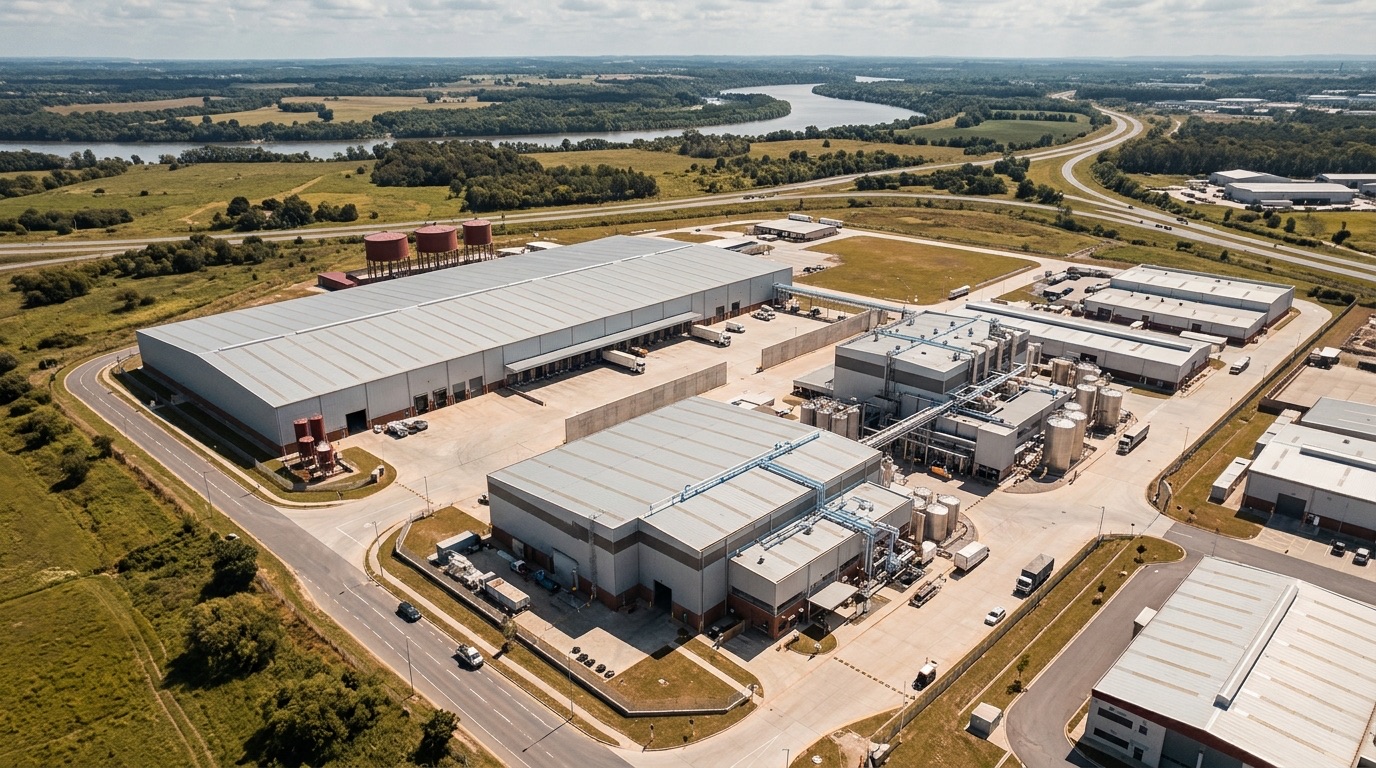
What COPE data is and what it decides
COPE stands for construction, occupancy, protection and exposure: the four property risk characteristics an underwriter reviews when evaluating a submission for property insurance. Construction is how the building is built, occupancy is what happens inside it, protection is the fire defence around it, and exposure is what surrounds it. Every technical price you are quoted starts with these four answers, and every gap in them gets filled with someone else's assumption.
That is why the underwriter's first move on a new quote is a query against the building data or the property schedule: what construction class, what occupancy code, what protection at this location, what hazard at these coordinates. Their rating model and their reinsurance reporting need that minimum dataset before they can commit capacity.
The mechanism that follows is simple and expensive. When a COPE element is missing, outdated or vague, the underwriter does not pause the quote. They substitute a conservative default and price it:
- A blank construction class is read as the worse grade, because the underwriter cannot verify better.
- An occupancy recorded as a single mixed code is priced on the most hazardous activity inside it.
- Protection described as 'sprinklered' without inspection records earns little or no credit, because a certificate alone cannot be verified at loss time.
- A location without precise geocoding is run through the catastrophe model at postcode level, which returns a generic estimate rather than a site-specific price.
None of these defaults appear on the quote as a line item. They surface as a rate above what your risk deserves, the insurance equivalent of overpaying for clothes that don't fit, and the only way to remove them is to replace the assumption with a document.
Two limits on what COPE can do. First, it is necessary but not sufficient: underwriters also weigh the loss record and the quality of management, so a clean schedule does not offset a poor claims history or weak maintenance. Second, the rate is not the whole prize. What a buyer is after is the lowest total cost of risk, the right coverage and a claim that pays in full, and COPE evidence bears on all three.
COPE in one table
The table maps each element to what it records, what it proves to the underwriter, the document that evidences it and what it decides beyond the rate. Use it as a scoring sheet against your own property schedule before the next renewal, or as the starting point of a coverage-gap and risk-pricing diagnostic across your whole programme.
| Element | What it records | What it proves to the underwriter | Document that evidences it | What it decides beyond the rate |
|---|---|---|---|---|
| Construction | Primary materials and approach: frame, masonry, noncombustible, fire resistive; age and later upgrades | How the structure behaves in a fire, and which rating class applies | Architectural drawings, building permits, retrofit records, roof reports | Fire walls, compartments and separation bound the probable maximum loss (PML), which sets the limit |
| Occupancy | How the building is being used: the activity, processes, storage and people | The ignition and loss severity profile of the operations | Operations description, process flow, hazardous-materials inventory, floor plans | Bottleneck processes and single points of failure set the business interruption loss and the indemnity period |
| Protection | Fire defence: sprinklers, water supply and pressure, alarms, fire-brigade response | That an ignition will be detected and controlled before it becomes a large loss | Sprinkler inspection and adequacy reports, water-supply tests, alarm certificates, brigade response arrangements | Active protection sets the normal loss expectancy (NLE) and the grading; the PML assumes it fails |
| Exposure | Risks posed by neighbouring property and the surrounding area: flood zone, wildfire area, wind, neighbouring combustible or hazardous occupancies | The external perils the site cannot control and their realistic severity | Geocoded locations, flood elevation certificates, roof and drainage records, distance to water and to neighbouring hazards | Natural-peril loss estimates set the catastrophe limits and sublimits |
One caution before you work through it: the four elements are read together, not in isolation. Protection requirements depend on construction and occupancy. A low-hazard occupancy in a fire-resistive building needs less documented protection to earn credit than a high-hazard process in a frame building. When you assemble the evidence, present it as a coherent picture per location rather than four disconnected folders.
Construction class and misgrading
Commercial property rating grades buildings on their susceptibility to fire damage. The Insurance Services Office (ISO) defines six construction categories in its Commercial Lines Manual, from least to most fire-resistive: frame, joisted masonry, noncombustible, masonry noncombustible, modified fire resistive and fire resistive1. A frame building has exterior walls of wood, brick veneer, stone veneer or stucco on wood; a fire-resistive building has exterior walls, floors and roof of masonry or fire-resistive materials with a fire resistance rating of at least two hours1. The further down that scale a building sits, the higher the fire part of its rate, because combustible construction both ignites more easily and loses more in a fire.
Where class tables apply
The ISO manual is a US rating manual, and its class tables drive pricing most directly in the US small and mid-market. Large corporate risks are rated mainly on engineering surveys, loss estimates and underwriter judgement, with the construction class as one input among many. For a large asset-heavy company the main COPE lever is therefore the risk engineering survey, and the insured can scope that survey itself by putting its renewal questions on the agenda before the engineer arrives. The class still matters as the first fact an underwriter checks, so keep it right.
How misgrading happens and what it costs
Misgrading is rarely anyone's error in isolation. It happens through inheritance: a building is recorded in a worse class than it actually is, and it carries the higher charge until proven otherwise. Common routes include a retrofit that was never reported to insurers, an acquisition where the schedule was copied from the seller's last submission, and a schedule entry that says 'masonry' without distinguishing joisted masonry (combustible floors and roof) from masonry noncombustible. The underwriter prices the recorded class. Nobody queries it, so the charge renews year after year.
Where class tables set the price, the cheapest and dearest construction grades are priced differently on the fire portion of the premium, so a wrongly graded building overpays for as long as the record stands. The fix is documentary. Prove the correct class with:
- Architectural and structural drawings showing materials and fire-resistance ratings
- Building permits for original construction and any later structural work
- Retrofit records: what was upgraded, when, and to what standard
- Roof reports showing the roof construction, which often decides between joisted masonry and masonry noncombustible
For a hypothetical plant: suppose a production building was recorded as old masonry at inception, then upgraded with a noncombustible roof and one-hour fire-rated floors in a retrofit five years ago. If the retrofit was never reported, the schedule still carries the worse grade and the renewal prices it. The evidence to correct the record already exists in the company's own files: the permit, the contractor's completion documents and the roof report. Assembling it is a data task, not a negotiation.
Occupancy and one high-hazard area
Occupancy is how the building is being used, and underwriters read it as the driver of both ignition frequency and loss severity. A warehouse storing palletised goods, a food plant with frying lines and a data centre are all 'buildings', but they carry entirely different occupancy codes and entirely different rates. The activity inside sets the baseline; the construction class modifies it.
The mixed-use trap
The expensive version of occupancy data is the mixed-use site recorded under a single code. One high-hazard area, a solvent store, a hot-work bay, a battery room, can set the rate for the whole site if the schedule does not separate it. For a hypothetical example: suppose a large mixed-use site where almost all of the floor area is ordinary low-hazard operations, with one bounded high-hazard area. The underwriter sees one occupancy class covering the whole footprint and prices the worst activity inside it across every square metre, so the ordinary operations pay the high-hazard charge.
The fix is to make the hazardous area visible as a bounded part of the site, not its definition. Document:
- The hazardous area's size and share of total floor area, so the underwriter can rate it separately
- Physical segregation and compartmentation: fire walls, doors, separation distances
- Dedicated protection: the sprinkler density, detection and suppression specific to that area
- Housekeeping and controls: storage heights, permit-to-work for hot work, ventilation
Then ask your broker in writing how the occupancy was coded on the last quote: per building and per area, or as a single site-wide class? Keep the written answer. If it was a single class, request a re-rating with the hazardous areas broken out. The underwriter may still load the hazardous area, but the rest of the site should then be priced on its own class.
Protection evidence that earns credit
Protection covers the fire defence between an ignition and a large loss: sprinkler systems, water supply and pressure, detection and alarm, and fire-brigade response. Its weight in the rate depends on what it protects: the same sprinkler system earns more credit over a high-hazard occupancy in a frame building than over a low-hazard one in a fire-resistive building, because it is doing more work in the loss chain. Active protection moves the grading, the insurer's rating of protection quality, and the normal loss expectancy (NLE), the loss expected when protection works as designed. It does not move the probable maximum loss, which assumes sprinklers and the fire response fail.
Here is where most submissions undersell real mitigation. A certificate on file earns little. The credit comes from documented mitigation shown at location and asset level: what was implemented, where it applies, when it was last inspected or tested, and what residual exposure remains. An underwriter who can verify the protection can rate it; one who cannot prices doubt. The records to assemble are:
- Sprinkler adequacy assessments and inspection dates, per building, including any impairment events (a sprinkler or alarm taken out of service) and how they were controlled
- Water-supply tests: flow, pressure, hydrant locations and the date of the last test
- Detection and alarm records, plus the impairment-control procedure for planned shutdowns
- Fire-brigade response arrangements: nearest station, whether paid or volunteer, and any site-specific access agreements
Be careful with live data. If an insurer offers a credit for sharing live sensor data from protection systems, get the offer and its conditions in writing before agreeing, and read the policy's conditions on keeping protection in service. A live feed shows the insurer every sprinkler or alarm shutdown, including planned ones, and an impairment the policy conditions do not allow for can be used against a claim. Agree in writing how planned impairments are notified and controlled first. The principle behind every record above still holds: evidence the underwriter can verify is what earns credit, and a binder on a shelf does not verify anything.
Exposure data for natural perils
Exposure is the element you do not control: the risks of loss posed by neighbouring property and the surrounding area. Flood zones, wildfire areas, wind and hail belts, and neighbouring facilities that could burn or explode all enter the rate through the insurer's catastrophe models. For many asset-heavy companies, natural-hazard exposure can dominate the property price, which is precisely why sloppy exposure data is so expensive.
Why geocoding decides the number
Catastrophe models run on whatever location data they are given. When a model uses postcode-level averages rather than asset-level geocoded data, the output is a generic estimate, not a site-specific price. A site at the good end of a postcode, above the modelled flood level, with a modern roof and working drainage, is priced as the postcode average. The insurer is not overcharging deliberately; the model simply has nothing better to work with.
The evidence that overrides the default is specific and mostly already exists:
- Precise geocoded coordinates for every insured building, not the site gate
- Flood elevation certificates showing finished floor levels against the modelled flood elevation
- Roof reports: age, construction, attachment and wind rating
- Drainage records and any documented flood mitigation, such as barriers or pumped systems
- Distance to water and to neighbouring hazardous occupancies
The practical ask is to request the catastrophe model output for your specific locations, identify where averages are substituting for real data, and submit corrected geocoded inputs and site-specific hazard evidence to override the default. Ask the broker in writing which catastrophe model and version was used, request the location-level output and keep the answer with the submission. Where the model has defaulted your site to an area average, the corrected inputs turn a generic estimate back into a price for your building.
What COPE evidence changes beyond the rate
A lower rate is the result most COPE advice aims at. For a large asset-heavy company it is often not the biggest one. The same evidence also sets the limit, decides whether values hold up at claim time and shows how long the business would be out after a loss.
From COPE to PML to limit to premium
Construction, separation and passive protection such as fire walls are what the engineer uses to bound the probable maximum loss (PML): the loss from one event if sprinklers and other active protection fail while fire walls, compartments and the distance between buildings hold. Active protection such as sprinklers moves the NLE and the grading, not the PML. The engineer estimates the PML for property damage and for the business interruption that follows, where occupancy data on bottleneck equipment and lead times comes in. The combined figure sets the limit, the most the insurer pays for one event, and the limit decides how many layers of cover you buy, each with its own premium. The chain runs from COPE to PML to limit to premium.
Illustrative example: a group with a total insured value (TIV) of 800M buys an 800M limit for a programme premium of 2.0M. Better COPE evidence that improves the rate by 5% saves 100k. The engineer's combined PML, bounded by fire walls and separation distances the COPE evidence documents, is 230M: 150M of property damage and 80M of business interruption. The group buys a 250M limit and drops the layers above it. Those high layers cost little per million and insurers set minimum premiums for them, so the saving is the premium on those layers, not 69% of the total. If they cost 300k, the smaller limit saves three times what the rate improvement does.
A limit at or near the TIV is right for a single site and for sites close enough that one event reaches all of them. Where a lender, landlord or concession contract requires full value, treat it as a term to test: get both structures priced so the cost of the covenant is visible.
Retentions: protection evidence also sets the deductible options. The normal loss expectancy, the loss when protection works, read with the loss record, shows how often smaller losses happen and how large they are. That is the evidence for asking the market to price two or three deductible options side by side, so the company keeps the working losses its cash flow can absorb and pays premium only for the volatility above them.
Values: rate times TIV is the real number
The premium is rated on the declared values, so rate times TIV is the real number, and a lower rate on an understated TIV only looks cheap. Understated values also cost money at claim time. The average clause, called coinsurance in the US, cuts every claim in proportion to the shortfall, however small the loss. Gen Re's worked example: a building insured for EUR 500,000 with an actual value of EUR 1 million suffers EUR 200,000 of fire damage, and the benefit is reduced by 50%, to EUR 100,000.2 Agreed value, where the insurer accepts appraised values in advance, removes that check.
Illustrative example: a site is declared at 60M but would cost 80M to rebuild. At a rate of 0.15%, the premium is 90k. A 20M fire is cut to 60/80 of the loss, so the insurer pays 15M and the company carries 5M. Declaring the true 80M raises the premium to 120k, and with agreed value the same fire pays the full 20M. The honest value costs 30k more a year and removes a 25% cut from every claim, 5M on that one fire. The extra premium pays for itself once claims average more than 120k a year; above that, the total cost of risk falls even though the TIV went up.
Values also drift. US commercial reconstruction costs increased 5.5% from July 2023 to July 2024, according to Verisk's 360Value Quarterly Reconstruction Cost Analysis3, so a schedule locked at inception falls behind claim-time values each year unless it is indexed.
Business interruption: single points of failure and lead times
Most COPE work describes property damage only. In a property damage and business interruption (PDBI) programme, business interruption (BI), the profit lost while a site cannot operate, can be the bigger share of the loss. The Lloyd's Market Association code for oil, gas and petrochemical survey programmes puts significant BI exposures at some 60-70% of the monetary value of losses in the sectors it covers.4 Extend the occupancy and protection data to what stops the revenue:
- Single points of failure: the transformer, press, kiln, control system or single supplier with no backup.
- Critical-equipment lead times, confirmed by procurement with the suppliers, and the spares held on site.
- The indemnity period, the time during which the policy pays lost profit, set from that recovery timeline rather than a 12, 18 or 24-month default.
Illustrative example: a transformer worth 1.5M feeds a line earning 40M of gross profit a year and takes 15 months to replace. The schedule lists it as one line of equipment value. With a 12-month indemnity period, the last 3 months of lost profit, about 10M, are uninsured. A spare held on site or an 18-month indemnity period closes the gap.
Corrections run both ways
Most COPE advice runs one way: prove the building is better than the record says. Accuracy has to run in both directions. Every correction you send is a declaration, and an overstated class or protection is a risk to the claim, not only to the price.
In the UK, the Insurance Act 2015 requires the insured to make a fair presentation of the risk before the contract is entered into, with every material representation of fact substantially correct.5 If a misstatement was deliberate or reckless, the insurer may avoid the contract, refuse all claims and keep the premium. If it was neither, the remedy follows what the insurer would have done: avoid the contract and return the premium if it would not have written the risk, apply the terms it would have imposed, or reduce the claim in proportion to the higher premium it would have charged.6 Other legal systems have their own rules, so check the governing law of each policy.
Illustrative example: a building is recorded as fully sprinklered, but an extension added later is not. The error was careless, and the insurer shows it would have charged 25% more premium had it known. Under the proportionate remedy it pays 100/125 of the claim: 8M on a 10M loss.
Correct upgrades and downgrades together, keep the evidence for each, and send every correction in writing with the date it took effect.
Check your COPE data before the next renewal
Everything above reduces to one preparation task, and a lean team of one to three people can run it. The guidance on renewal preparation in our own playbook is to commission a 60-day asset-data clean-up before renewal: a board-ready property schedule with correct construction, occupancy, protection, roof, sprinkler, valuation, geocoding and critical-equipment data for every major site. The steps:
- Pull the current property schedule and score every major site against the COPE table above: which element is evidenced, which is an assumption, and which entry describes the building better than it is?
- Flag every construction class you cannot prove with drawings, permits, retrofit records or a roof report, and start with the largest total insured value (TIV) sites.
- Break out hazardous areas on mixed-use sites and ask in writing how occupancy was coded in the last quote.
- Compile protection records per location: sprinkler inspections, water-supply tests, detection, impairment controls, brigade arrangements.
- Correct geocoding and assemble flood elevation, roof and drainage evidence for the sites with meaningful natural-hazard load.
- Add the business interruption layer: single points of failure, confirmed lead times and the indemnity period they imply.
- Score the whole renewal package against a property damage and business interruption (PDBI) submission checklist: every unchecked item marks a place where the market prices guesswork instead of your risk.
The schedule you prepare is the same one the underwriter queries before quoting, so the clean-up serves the renewal directly rather than as internal housekeeping. Put these questions to your broker in writing and keep the answers. When you tender the programme, ask every competing broker the same questions; the answers show who has looked at your data.
- How was each building coded for construction and occupancy on the last quote, and which entries were defaulted because evidence was missing?
- Which catastrophe model and version priced our locations, at what geocoding resolution, and can we have the location-level output?
- Which PML per fire zone is the limit based on, and what would the programme cost with the limit set to that PML instead of the TIV?
- Does the policy carry an average clause, and what would it take to replace it with agreed values?
The diagnostic question to close on: would your property schedule survive underwriter scrutiny element by element, and would it hold up in both directions at claim time? If you cannot answer that from your own files, the ScyAI Digital Risk Twin helps prepare and check the evidence: it reads the documents the company already has and reconciles construction, occupancy, protection and exposure data into one customer-owned model. Modelled figures support your own decisions; what you declare to the market comes from your documents and signed engineering studies. The judgement on what to share, with your broker and the market, stays yours.
Frequently asked questions
What does COPE stand for in insurance?
Construction, occupancy, protection and exposure. It is the underwriting framework insurers use to evaluate a property risk by how it is built, how it is used, its fire protection measures, and the external hazards surrounding it, as defined in the IRMI glossary.
What is COPE data used for?
Underwriters build COPE elements into their models when predicting the likelihood and size of a loss, then use them to set terms and price. For large risks the same data also feeds the engineer's loss estimates, which is why insurers query building data or the property schedule before they rate the risk.
Does COPE only affect the property rate?
No. Construction, separation and passive protection such as fire walls also set the engineer's probable maximum loss, which sets the limit; accurate values decide whether the average clause cuts a claim; and occupancy data on bottleneck equipment shapes the business interruption cover. On a large programme the limit can matter more than the rate.
How does construction class affect the property rate?
Construction looks at materials, age and system quality. Wood-framed buildings catch fire more easily than fire-resistive ones, so they carry a higher fire charge. Class tables drive US small and mid-market rating most directly; large risks are rated mainly on the engineering survey. A building recorded in a worse class keeps the higher charge until drawings, permits or retrofit records prove the correct class.
What evidence proves a building's construction class?
Drawings, building permits, retrofit records and roof reports. These documents let the underwriter verify the class instead of assuming the worst grade consistent with the schedule, which is what happens when the record is silent or stale.
Can one high-hazard occupancy raise the rate for the whole site?
Yes. On a mixed-use site, one high-hazard area such as a solvent store or hot-work bay can contaminate the rate for every building if the schedule does not separate it. Document the area's size, segregation, compartmentation and dedicated protection so the rest of the site is priced on its own merits.
What protection records earn credit with underwriters?
Sprinkler adequacy and inspection dates, dependable water supply and pressure, detection and alarm systems, impairment and hot-work controls, and fire-brigade response arrangements. A certificate alone earns little; the credit comes from documented mitigation shown at location and asset level, including what was implemented and when it was last tested.
What exposure data do underwriters need for natural perils?
Precise geocoded locations plus flood elevation certificates, roof reports and drainage records. Catastrophe models fed postcode-level averages produce a generic estimate rather than a site-specific price, so asset-level inputs and site-specific hazard evidence are what override the default.
What happens if a COPE detail is overstated?
It is a misstatement in the presentation of the risk. In the UK, under the Insurance Act 2015, the insurer can avoid the policy if it was deliberate or reckless. Otherwise it can avoid the policy and return the premium if it would not have written the risk at all, apply the terms it would have imposed, or cut the claim in proportion to the premium it would have charged. Correct the record in both directions.
How do I check our COPE data before the next renewal?
Run a 60-day asset-data clean-up: a property schedule with correct construction, occupancy, protection, roof, sprinkler, valuation, geocoding and critical-equipment data for every major site. Then score the renewal package against a PDBI submission checklist, since every unchecked item marks a place where the market prices guesswork instead of your risk.
Sources
- IRMI, Building Construction Categories (ISO) (insurance glossary)
- Gen Re, Risks of Underinsurance in Property and Possible Regulation (6 November 2023)
- Verisk, Quarterly Reconstruction Cost Growth Accelerates (13 August 2024)
- Lloyd's Market Association, Code of Practice for Delivery of an Oil, Gas & Petrochemical Risk Engineering Survey Programme (OG&P COPRES 2024/001)
- Insurance Act 2015, section 3: the duty of fair presentation (legislation.gov.uk)
- Insurance Act 2015, Schedule 1: insurer's remedies for qualifying breaches (legislation.gov.uk)
About the author

Alex Sidorenko
Alex Sidorenko is Head of Risk and Insurance AI at ScyAI, with more than 20 years of experience in corporate risk and insurance. FERMA named him Risk Manager of the Year in 2021.
This article was created with the help of AI.